

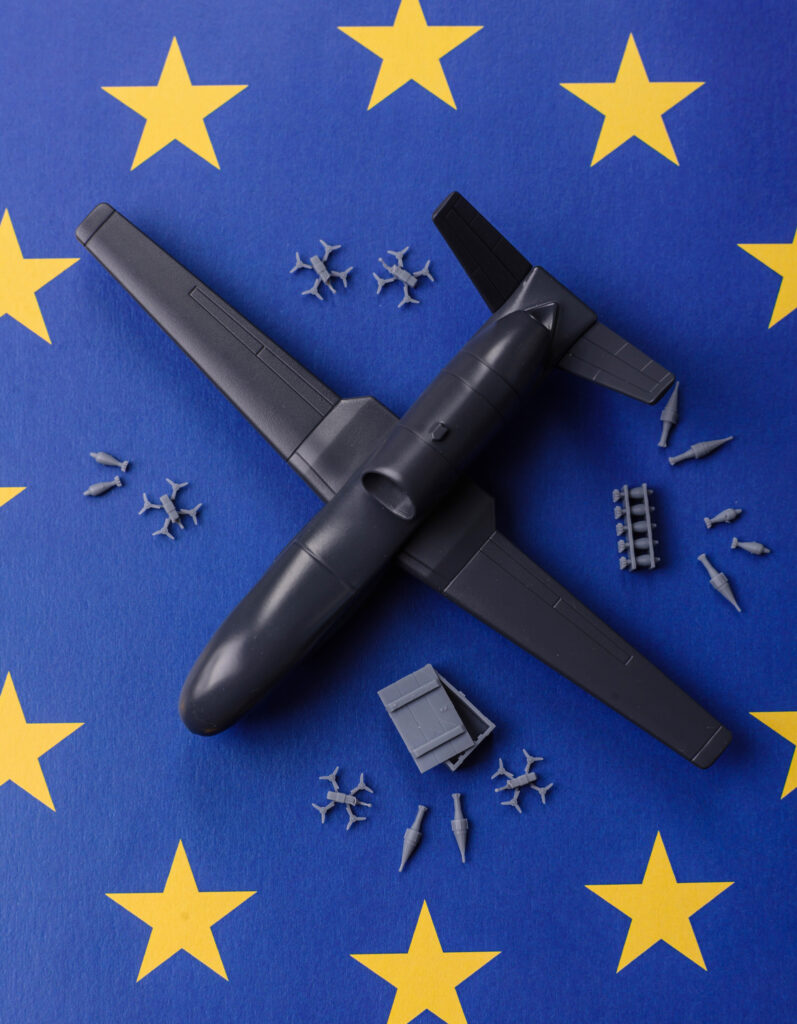

1. THE ROMANIAN DEFENSE INDUSTRY ON THE EUROPEAN MAP
Integrating Romanian companies into the supply chains of the European defense industry, active access to European funding programs, as well as strengthening strategic affiliations and active representation in NATO and EU forums.

2. CLEAR RULES FOR A COMPETITIVE INDUSTRY
Updating and aligning the applicable legislative framework at all levels (primary, secondary, and tertiary) to create clear regulations dedicated to companies in the defense industry and the dual-use segment. The objective is to ensure business predictability and create the conditions necessary for the industry to effectively contribute to the strategic objectives of national interest.

3. AUTHORIZATION AND PROCUREMENT PROCEDURES ADAPTED TO SECTORAL REALITY
Simplifying and streamlining authorization and operating procedures for companies in the defense and dual-use industry, alongside modernizing the sectoral public procurement framework, so that it reflects the realities, capabilities, and pace of development of the national industry.

4. A PERMANENT FRAMEWORK FOR DIALOGUE BETWEEN INDUSTRY AND THE STATE
Establishing and operationalizing a Permanent Advisory Council bringing together industry, public authorities, and academia in a genuine consultation mechanism, with a clear mandate, regular meetings, and measurable results in shaping public policy for the defense and dual-use sector.

5. REAL VISIBILITY FOR THE INDUSTRY'S CAPABILITIES
Establishing an Extended National Registry of economic operators with capabilities relevant to the defense industry — a tool for transparency, connection, and leveraging national industrial potential, useful to both public buyers and European partners.

6. FUNDED INNOVATION, SCALED TECHNOLOGY
Promoting research and development funding instruments with military-civilian and dual-use applicability, and developing a dedicated framework for access to funding for operators in the sector, including through coordinated public-private mechanisms.

7. PEOPLE PREPARED FOR AN EXPANDING INDUSTRY
A national program for training, reskilling, and retaining qualified technical personnel for the defense industry and the dual-use segment, developed in partnership with technical universities, research institutes, and competent authorities.